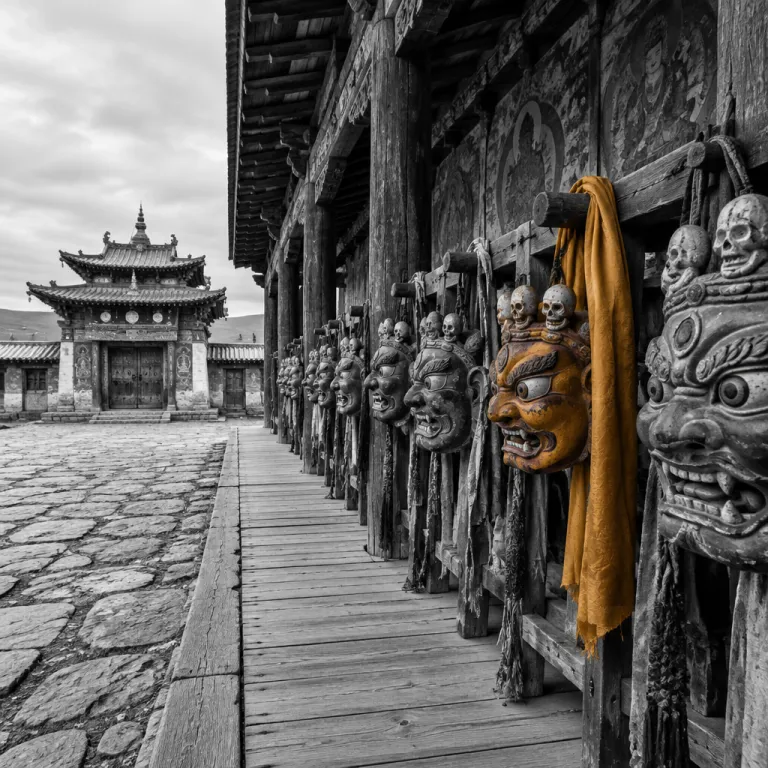
Why the Mongolia tsam dance Buddhist ritual belongs on a luxury itinerary
The Mongolia tsam dance Buddhist ritual is not a show you slot between spa appointments. It is a spiritual technology, a sequence of sacred dances where Buddhist monks in towering masks embody deities to cleanse a monastery and its surrounding land. For a luxury traveler, aligning your journey with a tsam dance means stepping briefly inside the living heart of Mongolian culture, not just admiring it from a heated SUV.
Locals often use the terms tsam and cham interchangeably, linking Mongolian tsam to the wider cham dance tradition of Tibetan Buddhism. These religious dances are performed as part of major Buddhist festivals, when monastic communities believe that wrathful deities help cut through evil spirits and ignorance. The result is a performance that feels less like theater and more like a moving mandala, where every step, drumbeat and swirl of brocade has a precise spiritual function.
From a travel planning perspective, the Mongolia tsam dance Buddhist ritual is both a highlight and a constraint. Tsam dances follow the monastic calendar of Buddhism in Mongolia, so they cannot be summoned on demand for a private audience, no matter how fine your hotel suite. That is exactly why timing your trip around a major tsam dance or cham dance can transform a good itinerary into a rare cultural immersion, especially when paired with a thoughtfully chosen luxury stay nearby.
From suppression to revival: how tsam dances returned to Mongolia’s monasteries
To understand why the Mongolia tsam dance Buddhist ritual feels so charged, you need to know what was almost lost. During the socialist period, many Mongolian monasteries were destroyed, their religious arts banned and their tsam masks burned or hidden, and only fragments of Mongolian cultural heritage survived in private homes or in the vaults of the Zanabazar Museum of Fine Arts. When democracy arrived, surviving Buddhist monks and lay scholars slowly retrieved scattered knowledge of tsam dances, reconstructing steps, chants and costume patterns from elders’ memories and museum collections.
Today, the Zanabazar Museum in Ulaanbaatar is essential context before you watch a live tsam dance. Its galleries of fine arts include thangkas, sculptures of guru Rinpoche and other deities, and a carefully curated ISP collection of ritual objects that show how Tibetan Buddhist iconography shaped Mongolian culture. Walking these rooms, you see how arts Zanabazar — the school of sculpture and painting linked to the first Jebtsundamba Khutuktu — fused Tibetan Buddhism with local aesthetics, a fusion that still animates every cham dance performed in Mongolian monasteries.
Urban travelers can base themselves at a premium city hotel and use it as a hub for this cultural immersion. For a clear overview of where to stay in style in the capital while you explore the Zanabazar Museum and other religious sites, consult this detailed Ulaanbaatar luxury hotel guide. From there, your guide can arrange day trips to active monasteries where the Mongolia tsam dance Buddhist ritual has been carefully retrieved and is once again performed as a living spiritual practice.
Where and when you can witness tsam masks in motion
Not every monastery in Mongolia stages a full Mongolia tsam dance Buddhist ritual, and those that do follow their own calendars. In and around Ulaanbaatar, Amarbayasgalant Monastery and Gandantegchinlen Monastery are among the most important sites where tsam dances or related cham dance rituals may be performed during key Buddhist festivals. In central Mongolia, monasteries near Kharkhorin and Erdene Zuu sometimes host religious performances where tsam masks and elaborate costumes appear in carefully choreographed sequences.
These events are not nightly shows for tourists but rare spiritual gatherings, which means flexibility is crucial. Dates are often confirmed only a few weeks in advance, and the exact form of the dance can vary depending on which deities are invoked, which Buddhist monks are available and how the local community participates. This is where a specialist cultural guide earns their fee, using relationships with monastic leaders to confirm when a Mongolia tsam dance Buddhist ritual will actually be performed during your stay.
Pairing these remote religious performances with high comfort is entirely possible if you plan carefully. Our curated overview of refined trips in Mongolia for landscape and culture maps which luxury ger camps and premium lodges sit within striking distance of key monasteries. From there, you can drive one or two hours to a cham dance, return to a hot shower and fine linens, and still feel that the day’s main luxury was the silence of the prayer courtyard as the first drumbeat signaled the arrival of the masked deities.
Reading the symbolism: from wrathful deities to the white man character
Watching the Mongolia tsam dance Buddhist ritual without context can feel overwhelming. Dozens of figures swirl past in heavy tsam masks, each representing specific deities, protectors or allegorical characters drawn from Tibetan Buddhism and Buddhism in Mongolia. A good guide will quietly decode the choreography, pointing out guru Rinpoche in his lotus hat, the skeletal lords of the charnel grounds and the comic white man figure who stumbles through the action as a reminder of worldly folly.
In both singular and plural forms, each tsam mask and all tsam masks together serve a spiritual purpose. Wrathful deities with bulging eyes and flaming hair are not evil spirits themselves but compassionate forces that subdue those evil spirits, cutting through obstacles to enlightenment for the community. The white man character, often portrayed with exaggerated features, offers a satirical mirror to foreign visitors and locals alike, reminding everyone that ignorance and greed are universal rather than tied to any one culture.
For travelers used to viewing art behind glass, it is striking to realize that many motifs you see in the Zanabazar Museum of Fine Arts or in the ISP collection of ritual objects are alive on the dance ground. The same arts Zanabazar aesthetic that shaped bronze statues of guru Rinpoche also informs the painted skulls on a cham dancer’s apron or the fine brocade on a tsam mask. In that sense, the Mongolia tsam dance Buddhist ritual is a moving museum of Mongolian culture, where religious arts are performed rather than merely preserved.
How to attend respectfully: etiquette for a sacred performance
Luxury travelers sometimes arrive at a Mongolia tsam dance Buddhist ritual expecting a private performance, and that is the first mindset to leave at the monastery gate. You are entering a religious space where Buddhist monks, lay devotees and local families gather for spiritual protection, not a staged event designed around visitor schedules. Dress modestly in long trousers or a long skirt, cover shoulders, and carry a light scarf in case you are invited into a temple where head coverings are appropriate.
Photography is usually tolerated in the open courtyard, but flash can disturb both dancers and spectators. Always ask your guide to check local rules, because some monasteries restrict images of specific deities or moments in the cham dance, especially when offerings are made or when the most powerful masks appear. If you are invited to circle the dance ground or receive a blessing, follow the flow of local people, moving clockwise and keeping a respectful distance from the performers.
Silence during key parts of the Mongolia tsam dance Buddhist ritual is a sign of respect. Conversations, phone calls and loud commentary about the performance or the costumes can break the concentration of those who believe that the dances are actively clearing evil spirits from the valley. Think of yourself less as an audience member at a performance and more as a guest at a collective spiritual practice, where your behavior subtly shapes the atmosphere for everyone present.
Pairing monasteries with premium stays: where ritual meets comfort
One of the pleasures of planning a high end trip around the Mongolia tsam dance Buddhist ritual is the contrast between raw monastic settings and refined accommodation. In Ulaanbaatar, premium properties with strong service standards make it easy to visit the Zanabazar Museum, attend a religious performance at Gandan and return to a quiet room where you can process what you have seen. Outside the capital, luxury ger camps near Kharkhorin, Hustai and the Orkhon Valley offer heated gers, fine linens and thoughtful cuisine within driving distance of active monasteries.
For travelers who prefer privacy, some high end lodges and private camps can be booked exclusively for a group. These work especially well if you are traveling with friends who share an interest in Mongolian culture, Tibetan Buddhism and the arts of the cham dance, because you can schedule unhurried debriefs after each monastery visit. Our guide to private villa style escapes in Mongolia outlines how to combine such exclusive stays with day trips to religious sites where tsam dances are still performed.
When choosing where to stay, prioritize properties that work with knowledgeable local guides and have a track record of sensitive cultural engagement. A good guide will not only secure accurate information about when a Mongolia tsam dance Buddhist ritual will be performed but also help you navigate offerings, donations and interactions with Buddhist monks. That combination of logistical finesse and cultural literacy is what turns a beautiful performance into a meaningful spiritual encounter, without sacrificing the comfort and service you expect from a premium stay.
Managing expectations: authenticity over spectacle in Mongolian cultural travel
Planning a trip around the Mongolia tsam dance Buddhist ritual requires a different mindset from booking a city break with guaranteed nightly shows. Dates can shift, weather can intervene and a monastery may decide to shorten or lengthen its dances based on internal religious considerations. If you approach the experience as a fixed performance with a start time and a seat number, you will almost certainly be frustrated.
Approach it instead as a chance to align your journey with the living rhythms of Buddhism in Mongolia. You might arrive to find that only part of the full cham dance cycle is performed that day, or that the most elaborate tsam masks are brought out only briefly, yet the atmosphere of shared devotion can be more powerful than any complete program. On other days, you may witness a full sequence of dances performed from morning until late afternoon, with local families picnicking on the grass while wrathful deities whirl past in clouds of incense.
Authenticity in Mongolian cultural travel often looks like this — slightly unpredictable, sometimes austere, always grounded in local priorities rather than visitor expectations. The reward for your patience is access to a cultural heritage that survived suppression and has now been carefully retrieved by communities who value it as a living spiritual resource. When you stand in a monastery courtyard and feel the drumbeat of a Mongolia tsam dance Buddhist ritual echo through your chest, the distance between luxury and simplicity briefly collapses into a single, unforgettable moment.
Key figures on Mongolian Buddhism, culture and tsam dances
- According to the Mongolian Ministry of Culture, more than 150 monasteries and temples are active across Mongolia, compared with fewer than 50 functioning sites at the end of the socialist period, illustrating the scale of the Buddhist revival.
- UNESCO estimates that around 53 percent of Mongolia’s population identifies with Buddhism, highlighting how deeply Buddhism in Mongolia shapes everyday culture and major religious festivals.
- The Zanabazar Museum of Fine Arts in Ulaanbaatar holds over 10,000 objects, including hundreds of Buddhist sculptures and ritual items that inform the reconstruction of tsam masks and costumes used in contemporary dances.
- Heritage researchers working with Tibetan Buddhism and Mongolian cultural institutions report that at least a dozen monasteries now perform some form of tsam or cham dance annually, up from only a handful of sites immediately after the democratic transition.
- Visitor surveys from the Mongolian National Tourism Organization indicate that cultural and religious experiences, including Buddhist festivals and monastery visits, are a primary motivation for roughly one third of international leisure travelers to Mongolia.
FAQ about tsam masks, Buddhist dances and luxury travel in Mongolia
What exactly is the Mongolia tsam dance Buddhist ritual ?
The Mongolia tsam dance Buddhist ritual is a series of masked monastic dances performed in monastery courtyards as part of major Buddhist festivals. Buddhist monks wearing elaborate tsam masks embody deities and protector figures from Tibetan Buddhism to symbolically clear evil spirits and obstacles from the community. It is a religious ceremony first and a cultural performance only second.
When is the best time to see tsam dances in Mongolia ?
Tsam and cham dances are usually performed during key dates in the Buddhist calendar, such as major summer festivals and monastery anniversaries. Exact dates vary by monastery and are often confirmed only a few weeks in advance, so working with a specialist cultural guide or agency is essential. Plan a flexible itinerary of at least several days around likely festival periods to increase your chances of witnessing a full Mongolia tsam dance Buddhist ritual.
Can I book a private tsam dance performance through my hotel ?
Authentic tsam dances in Mongolia are not typically available as private performances on request, even for guests at high end hotels. They are religious rituals performed according to monastic schedules, and most monasteries will not alter these for individual visitors. Some cultural centers may stage related dances for educational purposes, but these differ from the full spiritual ceremony.
How should I behave when attending a tsam or cham dance ?
Dress modestly, keep your phone on silent and follow your guide’s instructions about where to stand or sit. Photography is often allowed in the courtyard, but avoid flash and always respect any restrictions on filming specific deities or moments in the ritual. Move clockwise with local devotees, avoid blocking views and treat the space as a functioning place of worship rather than a theater.
Which museums in Ulaanbaatar help me understand tsam masks and Buddhist arts ?
The Zanabazar Museum of Fine Arts is the best starting point for understanding tsam masks, Buddhist iconography and the arts of Tibetan Buddhism in Mongolia. Its collections, including the ISP collection and works linked to arts Zanabazar, show how religious imagery used in dances developed over centuries. Other city museums and temple complexes also display ritual objects, but Zanabazar offers the most comprehensive overview for travelers planning to attend a Mongolia tsam dance Buddhist ritual.