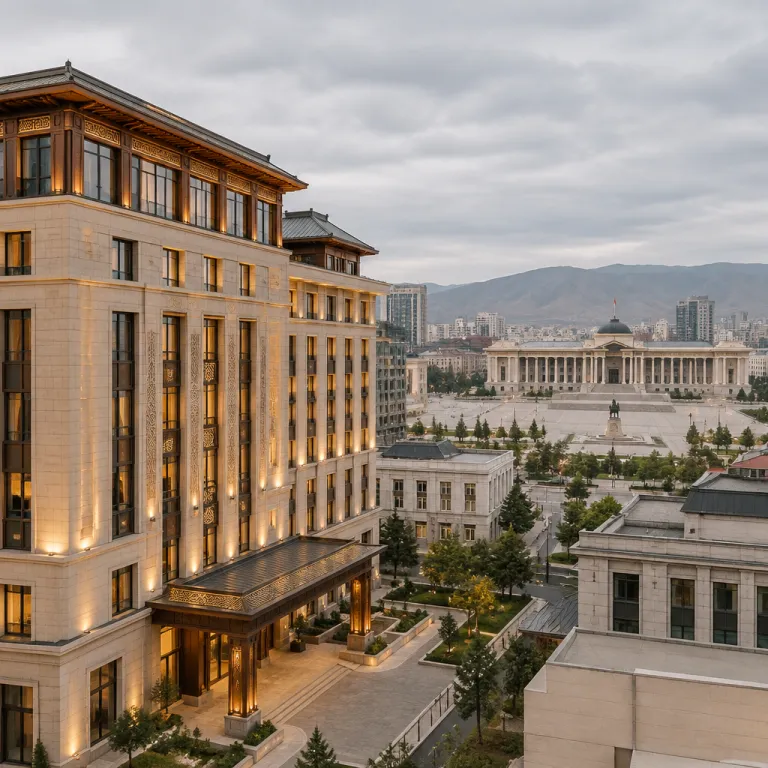
Why ulaanbataar is the refined gateway to Mongolia
Ulaanbaatar, often written ulaanbataar by international travelers, is the natural starting point for any luxury journey across Mongolia. This capital city sits in the north central part of the country, framed by Bogd Khan mountain and the Tuul River valley, which gives many premium hotels sweeping views over the city. The name Ulaanbaatar means "Red Hero" in Mongolian, and this heroic character still shapes how the city presents its most elegant addresses to discerning guests.
The city Ulaanbaatar was founded as a mobile monastery called Urga, then settled permanently and transformed into the political and economic centre of Mongolia. Today the metropolitan area concentrates a large share of the national gross domestic product, and its population has passed one and a half million residents according to the National Statistics Office of Mongolia, which creates strong demand for high end accommodation. This economic weight explains why the capital attracts international brands and refined Mongolian hoteliers who understand how to blend modern comfort with local heritage.
Travelers sometimes confuse Ulaanbaatar, Ulan Bator and ulan bator, yet all three names refer to the same capital city in Mongolia. The older name Urga still appears in some history museum collections, while the Russian influenced spelling Ulan Bator recalls the period when the city was closely linked to the Soviet Union. When you search for luxury hotels in Mongolia’s capital, make sure the property is genuinely central if you want quick access to museums, fine dining and public transport.
Staying in the cultural heart: museums, monasteries and refined hotels
Many of the most desirable luxury hotels in Ulaanbaatar cluster around the cultural centre, where you can walk to a major museum or theatre in minutes. Around Sükhbaatar Square, guests can easily reach the National History Museum, the Choijin Lama Temple Museum and the Government Palace, while still returning to suites with panoramic views of the capital. This central location allows travelers to experience the contrast between the coldest capital in winter and the warm glow of high end interiors designed for the harsh continental climate.
The National History Museum in Ulaanbaatar presents the full arc of Mongolian history, from the era of Genghis Khan to the socialist period under the Soviet Union and the later shift to a market economy. Nearby, the Choijin Lama Temple complex offers a quieter atmosphere, where intricate Buddhist art sits just a short drive from modern glass towers and luxury hotels. When you book a premium stay near these institutions, you gain effortless access to the city’s cultural scene while enjoying attentive service and curated experiences.
Several properties in the capital now design private museum themed itineraries, pairing expert guides with chauffeured transfers and restaurant reservations. Guests can start the day with a private tour of the Bogd Khan Palace Museum, then continue to the Choijin Lama Temple before returning to a spa suite overlooking the skyline. For travelers planning a broader itinerary across Mongolia, it is worth exploring a dedicated collection of luxury stays across the country’s most iconic highlights that begin or end in Ulaanbaatar city.
From ger districts to glass towers: choosing your luxury base
One of the most striking contrasts in Ulaanbaatar is the transition from traditional ger districts to the polished towers of the central business area. Ger districts are residential zones where families live in gers, the circular felt tents that remain a powerful symbol of Mongolian nomadic culture, and these areas now ring much of the capital. Rapid urbanisation and rural exodus have expanded these ger districts, which creates both social challenges and a unique urban landscape visible from many hotel windows.
Luxury travelers usually stay in the more central districts, where high rise hotels offer refined rooms, reliable heating for the continental climate and easy access to public transport. From these towers you can often see the line where the dense city centre gives way to the patchwork of gers on the surrounding hills, a reminder that Mongolia’s nomadic heritage still shapes life in the capital city. When choosing a property, consider whether you prefer a view over Bogd Khan mountain, the Ulaanbaatar skyline or the Tuul River valley.
Some premium hotels now curate excursions that introduce guests to ger districts in a respectful and informed way, often in partnership with local organisations. These experiences can include visits to community projects that address air pollution, energy efficiency and education, giving context to the challenges faced by Ulaanbaatar as it grows. For travelers seeking an itinerary that combines urban comfort with deeper cultural insight, it is helpful to consult a specialist guide to luxury hotels for an imperial style journey that links the capital with the wider steppe.
Climate, air quality and timing your luxury stay
Ulaanbaatar is widely known as one of the coldest capital cities in the world, with an annual average temperature below freezing and long, dry winters. This continental climate brings sharp temperature swings between seasons, so the timing of your stay will strongly influence the type of hotel experience you should book. In winter, prioritize properties with strong insulation, modern heating systems and wellness facilities, while in summer you may value terraces, large windows and access to nearby green spaces such as Bogd Khan mountain.
Air pollution is a serious concern in Ulaanbaatar city, especially during the coldest months when many households in ger districts burn coal for heating. Luxury hotels in the central districts increasingly invest in advanced air filtration systems, sealed windows and real time air quality monitoring to protect guests from the worst peaks. When evaluating options in Mongolia’s capital, ask directly about in room filtration, lobby air quality measures and whether the property supports any local initiatives to reduce emissions.
Because the city population has grown quickly, traffic and public transport can also affect how you experience the capital. Staying in a central hotel reduces the need for long car journeys, which is helpful on days when the air is particularly heavy and visibility drops. Many premium properties now coordinate airport transfers, timed sightseeing and even indoor cultural programming so that guests can enjoy Ulaanbaatar comfortably regardless of outdoor conditions.
History, identity and how they shape modern luxury
The story of Ulaanbaatar begins with a mobile monastery called Urga, which moved across the steppe before settling in its current valley location. Over time this religious centre evolved into the political heart of Mongolia, eventually becoming the capital city and the main hub for administration, culture and trade. The transformation from Urga to Ulaanbaatar, and from a theocratic seat to a modern metropolis, still influences how the city understands prestige and hospitality.
During the twentieth century, Ulaanbaatar was closely aligned with the Soviet Union, which left a visible legacy in architecture, urban planning and public monuments. After the transition to a market economy, the city opened rapidly to international investment, and luxury hotels began to appear alongside Soviet era apartment blocks and traditional ger areas. This layered history means that a single walk through the centre can take you from a statue of Genghis Khan to a Russian style theatre and then to a glass tower housing a five star property.
Key landmarks such as the Bogd Khan Palace Museum and the Choijin Lama Temple preserve the spiritual and royal heritage of the capital, while the National University of Mongolia and other institutions signal its role as an educational hub. When you stay in a high end hotel near these sites, you are not only close to museums but also to the intellectual life of university Mongolia, where students and researchers shape the country’s future. As one local explanation puts it, "Founded 1639 as mobile monastery", "Settled permanently in 1778", "Renamed Ulaanbaatar in 1924", and this timeline helps visitors understand why the city feels both ancient and strikingly new.
Practical tips for booking premium hotels in ulaanbataar
When selecting a luxury hotel in Ulaanbaatar, start by mapping how you plan to move through the city. Properties in the most central districts offer the easiest access to public transport, museums, government buildings and business addresses, which can significantly reduce travel time in a city whose population and car numbers have grown quickly. If your focus is culture, staying near the main history museum, the Choijin Lama Temple and the Bogd Khan Palace Museum will keep most highlights within a short drive or even a comfortable walk.
Business travelers often prioritise proximity to ministries, corporate offices and conference venues, as Ulaanbaatar generates a large share of Mongolia’s gross domestic product and hosts many major negotiations. In this case, look for hotels that combine strong meeting facilities with reliable high speed internet, quiet executive floors and multilingual staff familiar with both Mongolian and Russian business customs. Leisure guests may instead value spa facilities, fine dining that interprets Mongolian cuisine with contemporary techniques and concierge teams able to arrange excursions to Bogd Khan mountain or nearby ger camps.
Whatever your profile, it is wise to check how each property addresses the realities of the continental climate and seasonal air pollution, from heating systems to filtration and airport transfer logistics. Reading detailed reviews and curated guides can help, especially those that focus specifically on luxury hotel reservations in Mongolia and explain the nuances of staying in the capital city. By aligning your choice of hotel with the rhythms of Ulaanbaatar city, you can enjoy both the energy of a fast changing metropolis and the calm of a carefully designed retreat.
Key figures and context for luxury travel in ulaanbataar
- The elevation of Ulaanbaatar is about 1 350 metres above sea level, which contributes to its dry continental climate and the sharp temperature differences between seasons (data from geography records).
- The annual average temperature in the capital city is approximately −2.2 °C, a figure that explains why Ulaanbaatar is often described as one of the coldest capital cities worldwide and why high quality heating is essential in luxury hotels (climate studies).
- The population of Ulaanbaatar has reached around 1.5 million residents, concentrating a significant share of Mongolia’s urban population and creating strong demand for premium accommodation and services (National Statistics Office of Mongolia).
- Total gross domestic product generated in Ulaanbaatar is estimated at about 17.5 billion USD, underlining the role of the city as the major economic centre of Mongolia and a key destination for corporate travelers (World Bank and national economic data).
- Per capita GDP in the capital is above 10 000 USD, which is higher than the national average and reflects the concentration of high value activities, international companies and government institutions in Ulaanbaatar city (World Bank and national economic data).
FAQ about luxury and premium stays in ulaanbataar
Is ulaanbataar a safe city for luxury travelers ?
Central districts of Ulaanbaatar are generally safe for visitors, especially around major hotels, museums and government buildings. As in any large city, it is sensible to use licensed taxis or hotel arranged transfers, keep valuables secure and avoid poorly lit areas late at night. Most premium properties provide security staff, controlled access and concierge teams who can advise on current local conditions.
When is the best season to book a luxury hotel in ulaanbataar ?
Summer offers the most comfortable temperatures and clearer air, which suits travelers who want to walk between museums, markets and restaurants. Winter brings the most intense cold and higher air pollution, but it can also provide striking blue sky days and lower hotel occupancy in some segments. If you plan a winter stay, choose a property with strong heating, air filtration and convenient access to indoor cultural venues.
How many days should I spend in ulaanbataar before exploring the rest of Mongolia ?
Many luxury travelers allocate two to three nights in the capital city to adjust to the altitude, visit key sites and finalise logistics for journeys into the countryside. This allows time to see the National History Museum, the Choijin Lama Temple, the Bogd Khan Palace Museum and central markets without rushing. Guests who combine business meetings with leisure often extend their stay to four or five nights to balance work and cultural experiences.
Can I experience traditional ger culture while staying in a luxury hotel in the capital ?
Yes, several high end hotels in Ulaanbaatar collaborate with reputable tour operators to arrange day trips or overnight excursions to ger camps outside the city. These experiences allow guests to meet herder families, ride horses or camels and learn about nomadic life, then return to the comfort of a well equipped room in the evening. Some properties also host cultural performances and tastings of Mongolian cuisine on site for guests who prefer shorter outings.
What should I pack for a premium stay in ulaanbataar given the climate ?
In winter, bring layered thermal clothing, a down jacket, insulated boots, gloves and a hat that covers your ears, as temperatures can fall well below −20 °C. Summer days are milder but can still be cool at night, so a light jacket, comfortable walking shoes and sun protection are useful. Regardless of season, many luxury hotels offer laundry services, so you can pack fewer items and still remain well dressed for fine dining or business meetings.
Trusted references for further planning
- National Statistics Office of Mongolia for up to date data on Ulaanbaatar’s population and gross domestic product.
- Mongolian National Tourism Organization for official guidance on travel seasons, safety and cultural etiquette in the capital city.
- World Health Organization regional air quality reports for independent information on seasonal air pollution patterns in Ulaanbaatar.