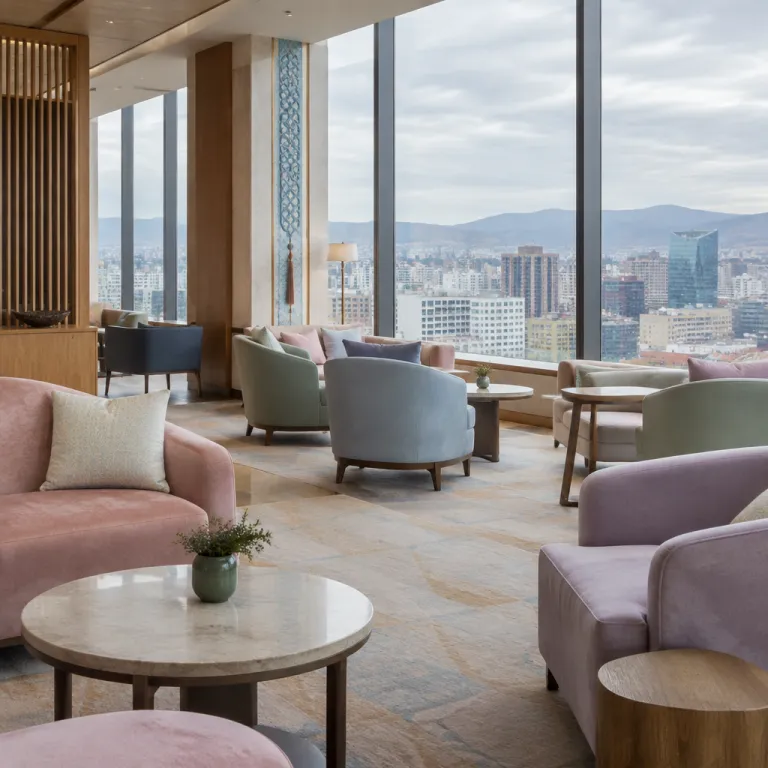
Ulaanbaatar city as a refined gateway to Mongolia
Ulaanbaatar city stands in a high valley on the Tuul River, a capital where glass towers rise above monasteries and ger districts. On a clear autumn morning, you might step out of your hotel to see frost on the pavements, incense drifting from a nearby temple, and the distant line of the Bogd Khan mountains glowing in sharp, high-altitude light. This capital concentrates the political centre, economic heart, and cultural soul of Mongolia, which makes it the natural base for luxury and premium hotel bookings across the country. Set at about 1 350 metres above sea level, the city offers clear light, big skies, and a sense of space that many travellers from the wider Asia Pacific region find unforgettable.
The Government of Mongolia and the City Administration of Ulaanbaatar have shaped this urban hub as both a modern metropolis and a guardian of Mongolian history. Their planning balances new districts, expanding ger areas, and infrastructure such as rail links and the international airport with policies that protect national heritage sites in the city centre. This dual role matters when you choose a high end hotel, because the best properties place you close to both the business core and the most important cultural landmarks of Ulaanbaatar.
Founded originally as the mobile monastic settlement of Urga, the city later became Ulan Bator under the Soviet Union before reclaiming the Mongolian name Ulaanbaatar, meaning Red Hero. That layered history is visible everywhere, from the central statue of Chinggis Khaan on Sükhbaatar Square to the Soviet era facades that frame the square and the traditional temples that survived the twentieth century. When you book a luxury stay in Ulaanbaatar city, you are not just reserving a room in the capital; you are positioning yourself inside a living narrative that connects nomadic Mongolia, socialist Ulan Bator, and a fast moving market economy capital.
Staying in the cultural centre: from museums to monasteries
For travellers who care about Mongolian history and culture, the most strategic choice is a premium hotel in or near the city centre. From here, you can walk or take short transfers to the National Museum of Mongolia, the Natural History Museum, and the History Museum collections that trace the country from the era of Genghis Khan to the modern capital period. Many luxury properties curate private tours with expert guides, which is invaluable when you want context for the artefacts and statues you see in each museum.
South of the central square, the Choijin Lama Temple Museum offers a quieter, more spiritual counterpoint to the grand national institutions. This former monastery, now preserved as a museum, holds intricate Buddhist art and provides a rare window into pre Soviet religious life in Ulaanbaatar, when Urga was a major monastic centre. A refined hotel concierge can arrange after hours visits or small group tours, allowing you to experience the temple complex without crowds and to understand how Mongolian, Tibetan, and Chinese influences shaped its architecture.
To the south of the city, the Bogd Khan Palace Museum of Mongolia presents the winter residence of the last Bogd Khan, the spiritual and temporal leader who bridged the transition from Qing and Chinese influence to an independent Mongolian country. Many high end itineraries pair a morning at the Bogd Khan palace with an afternoon drive into the Bogd Khan mountain area, one of the world’s earliest protected national park zones. If you are planning a broader journey that includes rural lodges, shoulder season expeditions, or national park stays, it is worth studying a curated route such as the shoulder season loop itinerary, then anchoring your first and last nights in a calm, well located Ulaanbaatar hotel.
Luxury hotels amid Ulaanbaatar’s evolving skyline
The skyline of Ulaanbaatar city has changed dramatically as Mongolia’s market economy has matured and international brands have entered the capital. Around Sükhbaatar Square and the city centre, you now find a cluster of luxury and premium hotels that cater to business travellers, cultural tourists, and Asia Pacific visitors who expect high service standards. These properties often frame views of the central statue of Genghis Khan or Chinggis Khaan, the Parliament House, and the surrounding Soviet era buildings that define the ceremonial heart of the city.
Many of the finest hotels, such as Shangri-La Ulaanbaatar and The Blue Sky Hotel and Tower, sit within a short drive of the international airport, which is essential in a country where domestic flights and long overland tours often depart early. A good concierge team will coordinate airport transfers, assist with visas and permits for national park visits, and arrange private guides for city tours that include the Choijin Lama temple, the Bogd Khan palace, and the main history museum. When evaluating options, look for properties that understand both the rhythms of Ulaanbaatar’s business calendar and the seasonal patterns of tourism across the capital and the wider country.
Travellers who want a deeper sense of place should consider hotels that integrate Mongolian design elements, from traditional textiles to subtle references to ger districts and nomadic life. Some leading properties partner with University Mongolia researchers and local artisans to curate in house exhibitions on Mongolian history, natural history, and contemporary art, which turns the lobby into a living library of the capital’s story. For a detailed look at neighbourhoods, service styles, and property types in the city, the guide to staying in style in Ulaanbaatar is a useful companion when you compare hotel locations and categories.
From ger districts to national parks: contrasts around the capital
One of the defining contrasts of Ulaanbaatar city lies between its modern centre and the sprawling ger districts that ring the capital. These ger districts, where many families live in traditional felt dwellings on plots of land, reflect the rapid rural to urban migration that has pushed the city population to about 1.79 million residents. Luxury travellers do not usually stay in these areas, yet thoughtful hotel concierges can arrange responsible visits with local partners that explain how this urban fringe shapes the social fabric of Ulaanbaatar.
Air pollution in winter remains a serious challenge for the city, particularly in and around the ger districts where coal and other fuels are still widely used for heating. High end hotels in the city centre often invest in advanced air filtration systems, sealed windows, and wellness facilities that help guests cope with the dry, cold climate and the elevated particulate levels. When you compare properties, it is worth asking directly about air quality measures, especially if you plan to stay in Ulaanbaatar during the coldest months when the annual average temperature of about −2.4 °C feels much harsher.
Despite these challenges, the natural setting of the wider Ulaanbaatar area is a major asset for travellers who value quick access to wild landscapes. Within a short drive from the city centre, you can reach the Bogd Khan mountain national park zone, river valleys, and steppe areas where traditional herding life continues. Many premium hotels specialise in arranging day tours that combine a morning in a museum or library with an afternoon in nature, giving you a balanced sense of Mongolian history, natural history, and contemporary life in and around the capital.
Planning premium tours from Ulaanbaatar across Mongolia
Because Ulaanbaatar is the capital and main transport hub of the country, almost every premium itinerary in Mongolia begins and ends in this city. The international airport connects the capital to major Asia Pacific gateways, while domestic flights and rail lines fan out toward the Gobi, central steppe, and northern lakes. A well chosen luxury hotel in Ulaanbaatar city becomes your logistical anchor, a place where you can store luggage, rest between long drives, and meet expert guides for tailored tours.
Many travellers pair a few nights in the Ulaanbaatar hub with multi day tours that explore monasteries, national parks, and remote ger camps. In these cases, it is helpful to work with a booking platform or concierge team that understands both the realities of the Mongolian market economy and the cultural nuances of visiting rural communities. For deeper context on how high end stays can integrate with local customs, art, and performance, you can consult this guide to cultural experiences for discerning travellers in Mongolia, then adapt its principles to your own route.
Some of the most rewarding itineraries use Ulaanbaatar as a base for themed excursions that trace Mongolian history from the age of Genghis Khan and Chinggis Khaan to the Soviet Union period and the present market economy. A day might start with a visit to the central statue of Genghis Khan, continue to the National Museum and the Bogd Khan palace, and end with a performance of traditional music and dance arranged through your hotel. By structuring your tours this way, you allow the capital city to frame the wider story of the country, rather than treating Ulaanbaatar as just a transit point.
Practical insights for an elegant stay in Ulaanbaatar
Climate, altitude, and urban form all shape the experience of staying in Ulaanbaatar city, so a few practical details will help you choose the right hotel. The city sits at about 1 350 metres, which contributes to its reputation as one of the coldest capitals in the world, and the answer to the question “Why is Ulaanbaatar so cold?” is simple : “High elevation and inland continental climate cause extreme winter lows”. Luxury properties respond with high quality insulation, modern heating, and wellness facilities that help guests adjust after long flights into the international airport.
With a city population of around 1.79 million people, Ulaanbaatar is by far the largest urban centre in Mongolia and the clear national hub for business, education, and culture. Institutions such as University Mongolia and the national library attract students and researchers from across the country, which gives the city centre a youthful energy that visitors feel in cafés, galleries, and performance venues. When you select a premium hotel, consider whether you prefer to be close to these academic and cultural clusters or in a quieter district with faster access to outbound roads for tours.
Travellers interested in architecture and political history will notice how the city reflects its passage from Urga to Ulan Bator under the Soviet Union and finally to Ulaanbaatar as a sovereign capital. Soviet era apartment blocks stand beside new glass towers, while traditional temples such as Choijin Lama and the Bogd Khan palace preserve the spiritual heritage of the country. By choosing a hotel that offers well designed city tours, access to a knowledgeable library of resources, and staff who can interpret both Mongolian and Chinese influences on local culture, you turn your stay in Ulaanbaatar into a refined, context rich experience rather than a simple overnight stop.
Key figures for luxury travel in Ulaanbaatar city
- The city population of Ulaanbaatar is about 1.79 million persons, according to recent United Nations and National Statistics Office of Mongolia data, which means almost half of the country’s residents live in the capital city.
- Ulaanbaatar stands at roughly 1 350 metres above sea level, a high elevation that contributes to its cold, dry climate and shapes how luxury hotels design heating, insulation, and wellness facilities.
- The annual average temperature in the Ulaanbaatar area is around −2.4 °C, based on long term ERA5 climate normals, so premium travellers should expect very cold winters even when staying in well heated properties.
- Rapid rural to urban migration has expanded ger districts around the city centre, which affects air pollution levels in winter and encourages high end hotels to invest in advanced air filtration systems.
- Ulaanbaatar’s role as political, economic, and cultural centre of Mongolia means that most national museums, the main library, and key statues and monuments are concentrated within a compact central zone that is easy to access from luxury hotels.
FAQ about luxury stays in Ulaanbaatar city
Why is Ulaanbaatar so cold compared with other capitals ?
Ulaanbaatar is unusually cold because it sits at about 1 350 metres above sea level and far from any moderating ocean, which creates an extreme continental climate with very low winter temperatures. As the dataset notes, “High elevation and inland continental climate cause extreme winter lows”, and this combination makes the capital city one of the chilliest in the Asia Pacific region. Luxury hotels respond with strong insulation, modern heating, and wellness facilities that help guests adapt.
How many people live in Ulaanbaatar city today ?
The latest consolidated figures indicate that about 1.79 million people live in Ulaanbaatar, which represents a large share of the total population of Mongolia. This city population has grown quickly due to rural to urban migration, especially into ger districts on the outskirts of the capital. For travellers, this concentration of people means better services, more hotel options, and a dense cultural scene in the city centre.
What does the name Ulaanbaatar mean, and how does it relate to Urga and Ulan Bator ?
The name Ulaanbaatar translates as Red Hero in Mongolian, a title adopted when the city became the capital of a modern, independent country. Earlier, the settlement was known as Urga, a mobile monastic centre, and later as Ulan Bator during the Soviet Union period, when the national government aligned closely with Moscow. Today, the official name Ulaanbaatar reflects both national identity and a move beyond the Soviet era.
Is Ulaanbaatar a good base for tours across Mongolia ?
Yes, Ulaanbaatar city is the primary base for tours because it hosts the main international airport, domestic flight connections, and rail links that radiate across the country. Most premium itineraries use a luxury hotel in the city centre as a starting and ending point for journeys to national parks, monasteries, and remote ger camps. This structure allows travellers to enjoy refined services in the capital city while accessing traditional landscapes and cultural sites across Mongolia.
How does air pollution affect luxury travel in Ulaanbaatar ?
Air pollution in Ulaanbaatar is most severe in winter, when many households in ger districts burn coal and other fuels for heating, which raises particulate levels across the capital. High end hotels in the city centre typically mitigate this with filtered air systems, sealed windows, and wellness amenities that help guests recover after time outdoors. Travellers who are sensitive to air quality may prefer to visit in the warmer months, when pollution is lower and outdoor tours around the Ulaanbaatar region are more comfortable.
Trusted references for further reading
- National Statistics Office of Mongolia
- United Nations Department of Economic and Social Affairs
- European Bank for Reconstruction and Development (EBRD) reports on Ulaanbaatar urban development