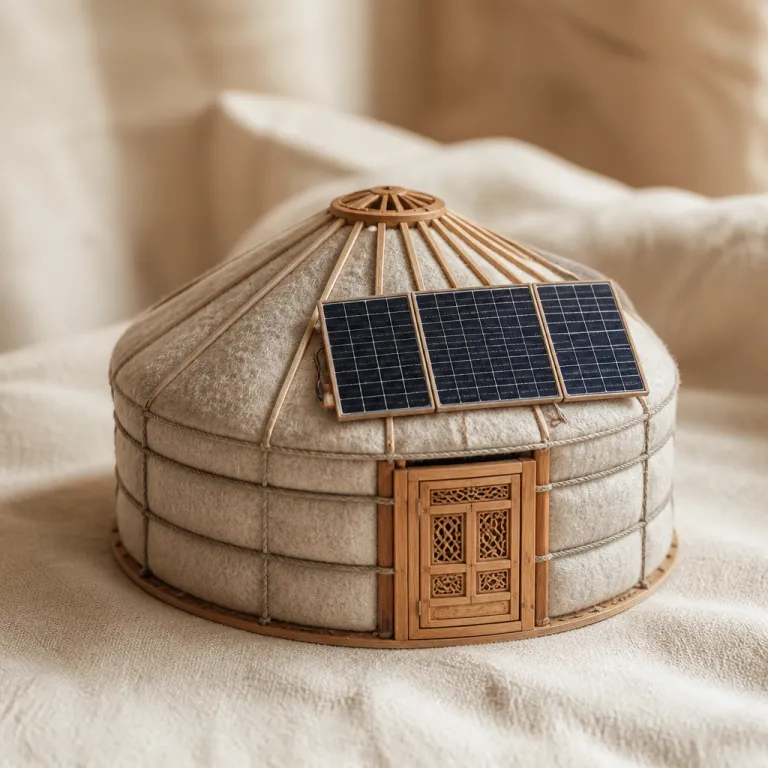
From nomadic solar panels to off-grid luxury in the Gobi
Crossing Mongolia by road, you notice something subtle on the horizon. A single solar panel leans beside a nomadic ger, proof that sustainable travel in Mongolia and every eco lodge now stand on foundations laid by herders. Those same panels that power a radio and a single bulb have become the quiet blueprint for luxury hospitality in the Gobi Desert.
The Mongolian government, backed by the World Bank and the Government of the Netherlands, equipped more than one hundred thousand nomadic households with portable solar systems through the Renewable Energy for Rural Access Project (World Bank Project ID P099321) and the earlier National 100,000 Solar Ger Electrification Program. That large scale solar electrification effort showed that sustainability could work in motion, with 50–100 watt panels, compact charge controllers and sealed batteries designed to move as easily as a camel caravan across the steppe. When you check into a high end lodge in Mongolia today, you are stepping into a refined version of that same portable energy logic, scaled up with multi‑kilowatt arrays and higher capacity inverters for hot showers and heated floors.
For travelers planning a journey in Mongolia, this context matters. The rise of sustainable tourism in Mongolia is not a marketing slogan but an evolution of real nomadic expeditions into modern life. When you evaluate any eco lodge in the Gobi Desert or in a national park, you are also choosing how your own comfort interacts with a fragile energy ecosystem that still respects sacred rivers and wide open silence.
Three Camel Lodge and the pillars of sustainable power
Nowhere is this energy paradox clearer than at Three Camel Lodge in the Gobi Desert. This camel lodge, often shortened by regulars to simply the three camel, sits in a valley of ochre ridges within easy reach of the Flaming Cliffs. Guests arrive expecting luxury, yet the real story is how the lodge balances that expectation with strict pillars of sustainable power use.
Three Camel Lodge operates as a hybrid system, combining solar arrays with carefully managed generator backup. According to lodge management, the property now runs on a solar plant of roughly 30 kilowatts backed by battery storage sized for several overcast days, with a diesel generator that is limited to a few hours of use during peak demand or extended storms. Solar performs well in Mongolia thanks to high altitude light and clear skies, but extreme swings from minus forty degrees Celsius to plus forty test every battery and cable. The lodge’s team treats each ger as a micro grid, limiting heavy loads while still delivering the essentials that define a premium stay, from reliable lighting to enough charging capacity for cameras and satellite devices.
For travelers comparing ger camps, this is where the language of sustainability becomes concrete. You are not just choosing between one lodge in the Gobi and another lodge in a different national park; you are choosing how much fuel is burned on your behalf each night, often measured in tens of liters of diesel saved when solar does the heavy lifting. As one long‑time herder who supplies the lodge with camels puts it, “When the sun runs the camp, the night is quiet and the air feels clean.” If you want a deeper dive into how luxury and authenticity intersect in these ger camps, read our analysis on the ger camp question and what luxury really means on the steppe.
Water, waste and the quiet work of preservation
Power is only one side of the sustainable travel equation in Mongolia. In a country where rivers are revered and many nomadic families still draw water by hand, the way an eco lodge handles grey water and solid waste is a direct test of its ethics. Luxury properties that take sustainability seriously design their systems to be almost invisible to the guest, yet very visible in their impact on the surrounding community and landscape.
At remote lodges in the Gobi Desert and in the Altai Mountains, engineered wetlands, sealed septic systems and low flow fixtures now sit behind the scenes. Typical designs route shower and sink water through gravel beds and reed plantings that filter contaminants before any discharge, while composting or dry toilets reduce the need for frequent pumping. These solutions protect fragile soils and support cultural preservation by ensuring that sacred sites and seasonal pastures remain usable for local herders. When you book a stay, ask how the lodge treats wastewater, because that answer reveals as much about its pillars of sustainable practice as any solar panel on the roof.
Some of the most forward looking properties align their operations with the goals of UNESCO’s sustainable tourism projects, such as the World Heritage and Sustainable Tourism Programme, which link heritage protection with community empowerment. They see preservation of the community as inseparable from preservation of the landscape, especially near a national park boundary or a revered cliff line. If you are planning a short but intense journey in Mongolia, our guide to the seventy two hour reset from Ulaanbaatar shows how to experience this balance without rushing it.
Guest comfort, transparency and the cost of a hot shower
Every traveler who books a luxury ger in Mongolia is part of a quiet negotiation. You want a hot shower after a day riding a camel across the dunes, but you also want your stay to align with sustainable tourism values. The question is how clearly lodges should show you the environmental cost of each comfort you enjoy.
Some properties now share simple dashboards in the main lodge, showing how much solar power has been generated that day and how much fuel the backup generator has burned. Others brief guests on arrival, explaining that hairdryers or electric kettles may be limited during cloudy spells to protect the system and avoid running the generator unnecessarily. This kind of transparency turns you from a passive consumer into an active participant in sustainability, and it often deepens your connection with the local community running the place.
There is a strong case for more lodges to adopt this open approach, especially as tourism in Mongolia grows and more travelers seek eco lodge experiences. If you want to align your booking choices with your values, start by reading our broader guide to luxury hotel booking and refined stays in Mongolia. Then, when you arrive at your chosen ger camp, ask the manager directly how your room is powered and what happens when the sun does not shine for three days.
From national policy to personal choices on the steppe
The story of solar panels on the Mongolian steppe did not begin with tourism. Long before the first eco lodge opened in the Gobi Desert, portable solar kits were riding in the back of Russian jeeps to reach nomadic families. Those systems changed daily life, allowing children to study after dark and herders to charge phones that linked them to distant markets.
As one development report from the World Bank’s Renewable Energy for Rural Access Project puts it with stark clarity, “They provide electricity for lighting, communication, and appliances.” That simple sentence explains why solar has become the backbone of off grid hospitality, from a single family ger to a full scale camel lodge with thirty guest gers and a central dining hall. The same tools — panels, batteries, inverters — now underpin both nomadic expeditions and high end tourism three hours from the nearest town.
For you as a traveler, this means that every booking is a vote for a particular future of tourism in Mongolia. Choose properties that invest in robust solar, that respect national park regulations and that work with local partners on cultural preservation and community empowerment. When you sit under a star heavy sky outside your ger, listening to the low hum of a battery bank instead of a generator, you will feel exactly how off grid power is reshaping what luxury can mean on the steppe.
FAQ
How do solar panels benefit Mongolian herders and remote lodges?
Solar panels give nomadic households and remote lodges reliable electricity without relying on coal or diesel. They support lighting, communication devices and essential appliances, which improves safety and comfort in isolated areas. A typical family kit might include a 50 watt panel and a small battery, while a remote eco lodge may operate with tens of kilowatts of capacity. The same technology that powers a family ger now underpins many luxury properties that operate far from any grid connection.
Can solar power alone run a luxury ger camp in the Gobi Desert?
In many cases, solar can cover a large share of a camp’s needs, especially for lighting, charging and low demand appliances. However, extreme temperatures and occasional cloudy periods mean that most high end ger camps still keep a generator as backup to protect batteries and guarantee hot water. The most responsible lodges design their systems so that solar does the heavy lifting and fossil fuels are used sparingly, often only during peak loads or several sunless days.
What should I ask a lodge about its sustainability practices before booking?
Ask how much of the lodge’s power comes from solar, how they manage water and wastewater, and whether they work with local communities on employment and cultural programs. You can also request details on waste management, fuel consumption per guest night and any partnerships with conservation or heritage projects. Clear, specific answers are a strong sign that sustainability is embedded in daily operations rather than treated as a slogan.
Are eco focused lodges in Mongolia less comfortable than conventional hotels?
Well designed eco lodges in Mongolia can be very comfortable, with warm gers, good bedding and thoughtful service. The main differences are usually around unlimited power use, constant hot water and heavy air conditioning, which are often restricted to protect off grid systems and keep generator hours low. Many travelers find that these limits enhance the experience, because they feel more connected to the landscape and to nomadic ways of living lightly.
How does off grid power affect the cost of staying at a remote lodge?
Building and maintaining robust solar systems, batteries and backup generators in remote regions is expensive, and that cost is reflected in nightly rates. Transporting equipment and fuel across rough tracks, replacing batteries every few years and servicing inverters all add to operating expenses. However, these investments reduce long term fuel use and environmental impact, which supports the sustainability of both the business and the surrounding ecosystem. When you pay a premium for a remote stay, part of that price funds the infrastructure that keeps the steppe quiet and the skies clear.