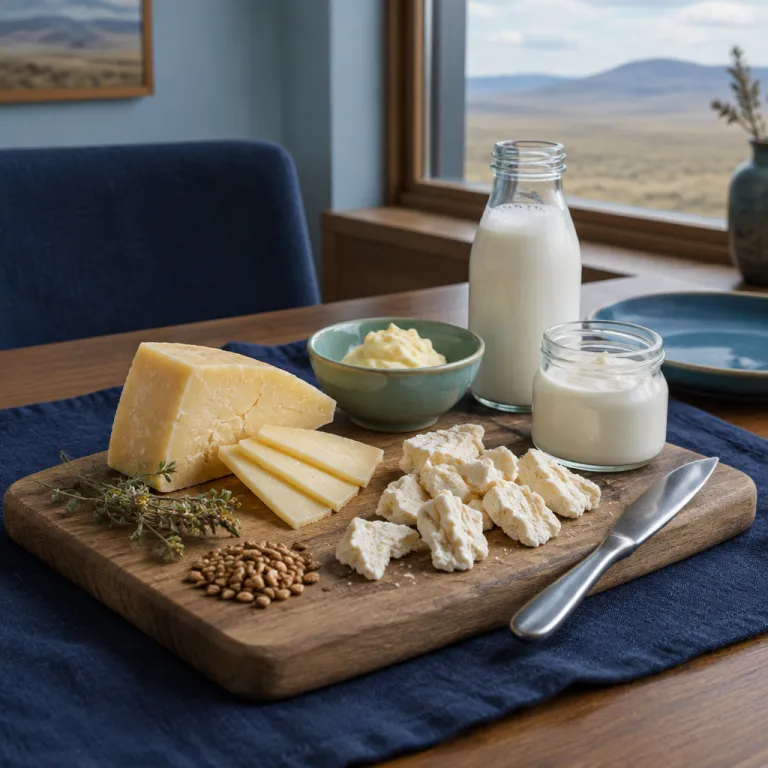
Mongolian white foods and why luxury hotels now care
Mongolia’s great culinary secret is not meat, but milk. In the nomadic canon of white foods, or tsagaan idee, traditional dairy snacks like aaruul sit quietly beside byaslag cheese and airag, the fermented mare’s milk that anchors daily life in ways most visitors never figure out. For couples used to polished cheese boards in Paris or Napa, this landscape of curd, milk products, and sun-dried snacks can feel both wild and unexpectedly refined.
Across Mongolia, herder families turn fresh milk into a spectrum of dairy products that keep for days or even months. The most emblematic is aaruul, a dried curd that begins as thickened milk, then is pressed, cut into small shapes, and left under the sun and wind until it becomes rock-firm yet intensely flavorful. These Mongolian dairy rituals are not nostalgic props for tourists; they are the infrastructure that lets people move with their herds across wide grasslands without refrigeration.
On a traditional cheese board in a city hotel, you might expect soft cheeses, red chutneys, and perhaps some wild berries. On a nomadic table, the equivalents are dried aaruul, fresh curds, airag, and sometimes sea buckthorn jam, all of them white or pale but with a surprisingly layered taste. When luxury properties in Mongolia now plate local dairy beside imported cheeses, they are not adding a gimmick; they are finally acknowledging that these white foods are the country’s original tasting menu.
From fresh curd to dried aaruul: how the steppe preserves milk
To understand aaruul, you need to follow the milk from udder to board. During the short high summer, when mares, cows, yaks, goats, and camels all give rich milk, families work long days transforming it into milk products that will last through harsher seasons. The process is both practical and poetic, a choreography of pots, fires, and wind that any serious food traveler should watch at least once.
Fresh milk is first gently heated, then allowed to separate into curds and whey, creating the base for both byaslag and dried curd snacks. The curds are pressed into soft white cheese, or left as loose pieces, then sliced or shaped into small figures before being laid on wooden racks outside, where they are traditionally dried by sun and air. Over three to seven days, depending on weather, these once tender curds become firm nuggets, evolving from mild snack aaruul to intensely tangy pieces that pair beautifully with wild berries or sea buckthorn purée.
Airag, the iconic fermented mare’s milk, follows a different path but belongs on the same Mongolian dairy board. Fresh mare’s milk is poured into a large leather or plastic vessel and churned for hours, becoming lightly alcoholic—often around 2–3%—and gently effervescent, with a lactic tang that cleanses the palate between richer foods. When you are invited into a ger near a monastery for a tsam dance festival, or after a long ride to see ritual performances described in guides to Buddhist performances worth timing a trip around, that first bowl of airag and a shard of aaruul are not snacks; they are your welcome.
How luxury hotels are plating the nomadic cheese board
In Ulaanbaatar and at high-end ger camps, chefs are finally treating Mongolian dairy with the same respect they give Wagyu or Burgundy. Rather than hiding aaruul and byaslag behind international menus, they now curate tasting boards that move from mild fresh curd to assertive dried aaruul, often framed as a “Mongolian cheese flight” for curious couples. This shift mirrors a broader confidence in Mongolia’s own food culture, where local milk products are no longer seen as rustic, but as terroir-driven.
At refined city properties often highlighted in guides to luxury business hotels in Mongolia, such as the Shangri-La Hotel Ulaanbaatar or Kempinski Hotel Khan Palace, you might start with soft byaslag drizzled with sea buckthorn reduction, then move to cubes of dried curd rehydrated slightly in cream, finishing with shards of wild, intensely sour aaruul. Some chefs add a modern figure to the board by pairing camel-milk yogurt with red berry compotes, or by serving chilled airag in stemware alongside white foods and wild berries. Out in the Gobi, luxury ger camps like Three Camel Lodge lean into the elemental, offering simply cut aaruul, fresh milk curds, and bowls of mare’s or camel’s milk as a pre-dinner ritual under the wind-swept sky.
For couples planning why their next great escape should be a visit to Mongolia, this new attention to dairy products changes how you plan meals. Instead of defaulting to imported cheeses, you can now request a Mongolian tasting board as part of a private dinner, or ask the concierge to arrange a day trip to a herder family where you taste aaruul at its source. That is where the line between hotel and steppe blurs; the same dried curd you nibble as a hotel snack becomes a bridge to the wild landscapes beyond the property.
Etiquette, taste, and low stakes immersion for first time visitors
Being offered aaruul or airag in a ger is as much about manners as about taste. When a host passes you a bowl of fermented mare’s milk or a plate of dried curd, the gracious response is to accept at least a token amount, even if the flavors feel unfamiliar. You can sip lightly, or break off a small piece of aaruul, but refusing outright can be read as a slight to both the food and the relationship.
For many travelers, this is a gentle entry point into Mongolian traditional life because the stakes are low. You are not being asked to ride for days across wild steppe or to eat challenging red foods; you are simply sharing milk products that sustain your hosts every day. Luxury hotels now brief guests on this etiquette during pre-trip emails or welcome talks, explaining how to add small gestures of respect, such as accepting the bowl with your right hand and supporting your elbow with your left when you take the airag.
On the palate, Mongolian dairy is more nuanced than its austere appearance suggests. Fresh curds and byaslag are mild, almost like a firm ricotta, while dried aaruul can be sharply sour, with a taste that lingers and pairs beautifully with wild berries or sea buckthorn jam. Camel’s milk and mare’s milk bring their own character to the board, and when hotels serve them alongside white foods and other dairy products, they create a tasting that feels adventurous yet controlled, ideal for couples who want cultural immersion without discomfort.
Where to taste aaruul, airag, and the full spectrum of white foods
To experience Mongolian dairy properly, you need both polished hotel versions and the rough-edged originals in the countryside. In Ulaanbaatar, upscale properties now commission aaruul from trusted herder families, then plate it with care, sometimes shaping the curd into elegant figure-like forms for a pre-dinner snack. These boards often feature a mix of dried curd, fresh cheese, and small glasses of airag, giving you a curated overview before you head into the wild.
Out on the steppe, the same foods appear in simpler form, often piled in generous bowls that sit at the center of the ger table for days. Here, dried curd is both food and symbol, a sign that the household has enough milk products to share, while white foods like byaslag and snack aaruul are offered to every guest who crosses the threshold. Some regions favor camel’s or mare’s milk, others lean into cow or yak milk curds, but across Mongolia the pattern holds; dairy products are the first language of hospitality.
For couples planning routes with the help of in-depth guides on why a visit to Mongolia makes such a powerful escape, the smartest strategy is to alternate nights in luxury hotels with stays at well-vetted ger camps. Let the hotel sommelier pair sea buckthorn sauces and wild berries with your curated cheese board one night, then sit on low stools the next day, sipping airag while children run in and out of the ger and the wind dries new batches of aaruul on the roof. Between these two poles, Mongolian dairy stops being a curiosity and becomes the through line of your journey, a quiet constant from city lobby to distant pasture.
FAQ
What exactly is aaruul, and how is it different from cheese ?
Aaruul is a Mongolian dried curd made from soured milk that has been pressed, cut, and traditionally dried in the open air. Unlike most cheeses, which remain moist and are aged in controlled environments, aaruul is hardened by sun and wind until it becomes a long-lasting snack. On a Mongolian dairy board, it plays the role of both cheese and candy, depending on how sour or creamy the curds were before drying.
Is it safe for sensitive stomachs to drink airag or try mare milk ?
Airag is fermented mare’s milk, so it contains some alcohol and active cultures that can surprise sensitive stomachs. Many luxury hotels now offer small tasting pours of airag alongside pasteurised camel’s or cow’s milk products, so guests can gauge their reaction. If you are unsure, start with a sip and focus on aaruul and other white foods, which are usually easier to digest.
Can vegetarians enjoy mongolian dairy aaruul food and white foods comfortably ?
Yes, most Mongolian traditional white foods are based on milk, curd, and other dairy products, with no meat involved. Aaruul, byaslag, milk curds, and yogurt made from camel’s or mare’s milk can form a substantial vegetarian-friendly snack or breakfast. When booking hotels in Mongolia, you can request a dairy-focused board that highlights local cheeses, sea buckthorn sauces, and wild berries instead of meat dishes.
Where should I go to taste authentic aaruul and not just a hotel version ?
The most authentic aaruul is still made by herder families who leave curds to dry for days on racks outside their gers. Many premium ger camps and trusted tour operators can arrange visits where you see milk products being transformed into dried curd and other foods in real time. Use city hotels as a gentle introduction to Mongolian dairy, then plan at least one overnight in the countryside to experience the full white foods tradition.
How should I behave when offered dairy products in a ger ?
When you are handed a bowl of airag or a plate of aaruul, accept it with your right hand and support your elbow with your left as a sign of respect. You do not need to finish everything, but you should at least taste the milk, curd, or snack aaruul that is offered. If you truly cannot drink more fermented mare’s milk, place the bowl down gently and let it be refilled for others, rather than refusing outright.