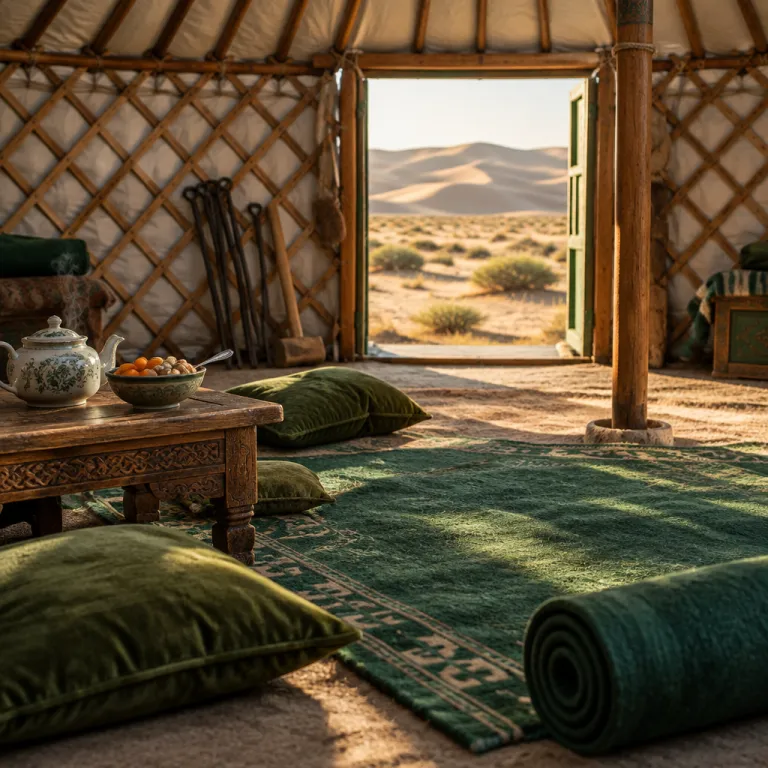
Understanding the Gobi Desert definition for luxury‑minded travellers
The clearest Gobi Desert definition for travellers is this: it is a vast cold desert and semi desert region stretching across southern Mongolia and northern China. This great desert steppe covers roughly 1 300 000 to 1 600 000 square kilometres in central Asia, depending on how its margins are defined by different geographic surveys, yet it is far from an empty wasteland. For guests booking luxury hotels in Mongolia, understanding this geography shapes when you travel, where you stay, and how you experience the Gobi.
In English, the word “Gobi” comes from the Mongolian word “gov”, which means a waterless place with gravel or bare rock rather than endless sand dunes. Many first time visitors expect a sea of sand like the Taklamakan Desert in western China, but the Gobi Desert definition includes rocky plains, low mountains, and plateau semi desert zones. When you plan a premium stay, this mix of desert steppe and mountain ranges determines whether you choose a lodge near dramatic cliffs, rolling dunes, or wide open plains.
Geographically, the Gobi lies in the rain shadow of the Tibetan Plateau and several north–south mountain ranges, which block moist air from the sea. As a result, the region forms one of the largest desert Asia landscapes, with elevations mostly between 900 and 1 500 metres above sea level. For luxury hotel guests, that altitude means cooler nights, clear skies, and exceptional stargazing directly from high end desert Mongolia camps or premium hotels in gateway cities.
Different parts of the Gobi Desert have distinct characters, and a precise Gobi Desert definition must include these regional names. Travellers hear about the Eastern Gobi, the Alashan Plateau Gobi, and the desert Gobi areas that edge into northern China. Each of these ranges and plateaus offers different scenery, so your choice of luxury or premium hotel in Mongolia should match whether you want remote southern Mongolia dunes or easier access from the north and east.
Key regions of the Gobi and what they mean for your stay
For trip planning, it helps to break the Gobi Desert definition into several major regions that shape your route and hotel choices. The Eastern Gobi lies closer to the border with China, where desert steppe merges with grassier steppe and low mountains. Here, travellers often combine stays in desert Mongolian camps with visits to monasteries and historic caravan routes that once linked central Asia with the Chinese heartland.
Farther west, the Alashan Plateau Gobi stretches across a high plateau semi desert, with elevations well above 1 000 metres above sea level. This part of the desert Gobi is drier and more rugged, with scattered sand dunes framed by eroded hills and isolated mountain ranges. Luxury travellers who value privacy often choose small high end camps here, then connect back to premium hotels in Ulaanbaatar or other Mongolian cities for a softer landing at each end of the journey.
To the south and west, the wider desert Asia region links the Gobi with the Taklamakan Desert and the Tibetan Plateau, creating a continuous belt of arid basins and uplands. While most luxury hotel infrastructure sits on the Mongolian side, your guides may reference features such as Lake Bosten in China or the Greater Khingan range in the north when explaining regional geography. These references help you place your chosen desert Mongolia camp within the broader map of central Asia, rather than seeing it as an isolated patch of sand.
Many culturally curious guests pair Gobi stays with visits to Mongolian monasteries and historic sites. If you are planning such a combination, it is worth reading about why Mongolia’s Buddhist monasteries feel so powerful in this open steppe and semi desert landscape. Understanding how the desert steppe, the upper waters of distant rivers, and the surrounding mountains shaped spiritual life will deepen every temple visit you make before or after your time in the Gobi Desert.
Climate, seasons, and how the Gobi feels on the ground
A practical Gobi Desert definition must include its climate, because temperature and wind will shape every luxury stay. The region is a cold desert and semi desert, with hot summers, very cold winters, and sharp swings between day and night. Guests arriving from sea level cities in Europe or East Asia often notice the dry air and altitude as soon as they step out of their premium hotel or desert Mongolia camp.
Summer brings warm days across southern Mongolia, especially in the Eastern Gobi and Alashan Plateau areas, where sand dunes heat quickly under the sun. Nights cool down fast on the plateau semi desert, so high end camps provide thick duvets and heated stoves even when daytime temperatures feel almost Mediterranean. Spring and autumn are often ideal for luxury travellers, with clearer skies, fewer dust storms, and comfortable conditions for camel rides and guided walks through the desert steppe.
Winter in the Gobi Desert can be harsh, yet it reveals another side of desert Asia that some experienced travellers seek out. Snow dusts the low mountains and mountain ranges, and the air turns crystal clear, with visibility stretching across vast distances in central Asia. If you choose this season, you will likely base yourself more in luxury hotels in Mongolian cities, using day trips or short overnights in well insulated desert Mongolian camps rather than long multi day journeys.
Because distances are large, many guests now favour slower itineraries that minimise packing and unpacking. For a deeper sense of place, consider the argument for spending more days at one carefully chosen Mongolian camp instead of rushing between many stops. Staying longer in a single area of the Gobi Desert allows you to feel daily shifts in light, wind, and temperature, which is the most authentic way to grasp the lived meaning of any Gobi Desert definition.
How Gobi geography shapes luxury and premium stays in Mongolia
The physical geography behind the Gobi Desert definition explains why luxury hotels cluster in certain Mongolian gateways and not others. Much of the desert lies on a high plateau semi desert, with rough tracks rather than paved roads, so travellers usually connect through Ulaanbaatar or regional hubs before heading south. From these cities, you can combine a night or two in a premium hotel with several nights in a high end desert Mongolia camp positioned near key natural highlights.
In the south, many camps sit close to dramatic sand dunes and eroded cliffs, where the desert steppe meets low mountains. These locations often overlook dry valleys that once carried the upper waters of ancient rivers, now reduced to seasonal streams or vanished entirely. When you stand on a dune at sunset, guides may point out how the surrounding ranges and distant Tibetan Plateau block moisture from the sea, creating the arid conditions that define the Gobi Desert and other desert Asia regions.
To the north and east, where the Gobi blends into steppe and semi desert grasslands, some properties focus on wildlife and cultural immersion rather than pure dune scenery. Here, you might stay in a luxury ger camp that partners with local herding families, learning Mongolian words for landforms and animals while exploring rolling plains. These areas also sit closer to the Greater Khingan and other mountain ranges that mark the transition from forest to desert, giving you a wider sense of central Asia’s ecological gradients.
When comparing options, it helps to read curated overviews of luxury and premium hotels in Mongolia that work well as bases for Gobi trips. Such guides explain which properties pair best with flights to southern Mongolia, which sit closer to the Eastern Gobi, and how long transfers take across desert Mongolian roads. Matching your hotel choices to the real geography behind the Gobi Desert definition will make your itinerary smoother and far more rewarding.
Cultural meanings of the Gobi for Mongolian hosts and guests
For Mongolian communities, the Gobi Desert definition is not only about maps and climate; it is also about identity and resilience. Nomadic herders have moved across this desert steppe and semi desert for centuries, following scarce upper waters and grazing that shift with each season. When you stay in a luxury ger camp, you are stepping into a living culture that has adapted to desert Asia conditions with remarkable skill.
Many hosts will explain the Mongolian word “gov” and its nuances, which differ from the English word “desert” that often suggests only sand dunes. In local usage, a gobi can be a gravel plain, a rocky plateau semi desert, or a wind carved basin between low mountains and ranges. Understanding this helps guests appreciate why some of the most meaningful experiences in desert Mongolia happen not on dunes, but on quiet walks across stony plains where the sky feels like a vast sea overhead.
Stories you hear around the campfire often reference distant landmarks such as the Tibetan Plateau, the Taklamakan Desert, or even Lake Bosten and the Greater Khingan range far to the north and west. These references place the Gobi within a wider central Asia narrative, where trade routes once linked China, Mongolia, and other regions across mountain ranges and deserts. As you listen, the Gobi Desert definition expands from a physical place to a cultural crossroads that has shaped Mongolian history and identity.
Instead of relying only on textbook summaries, the voices you will remember come from your Mongolian hosts, whose lived experience of desert Mongolian life gives the most authentic meaning to every English or Mongolian word you learn about the Gobi Desert. Let those conversations guide your understanding alongside any map or formal definition.
Planning routes, logistics, and hotel choices around Gobi geography
Once you understand the Gobi Desert definition in geographic terms, route planning becomes much clearer. Most luxury travellers fly from Ulaanbaatar to airstrips in southern Mongolia, then transfer by 4x4 across desert steppe and semi desert to their chosen camp. Distances can be long, so it is wise to limit the number of moves between properties and focus on one or two key regions such as the Eastern Gobi or the Alashan Plateau Gobi.
When choosing between camps, ask how close they are to major sand dunes, canyons, or mountain ranges, and how much driving each excursion requires. Some desert Mongolia camps sit right at the edge of dunes, while others are positioned on plateau semi desert with wide views but longer drives to specific sights. Clarifying these details in English with your operator before booking ensures that your expectations match the real geography on the ground.
Travellers who are sensitive to altitude should note that much of the Gobi lies between 900 and 1 500 metres above sea level. While this is lower than many parts of the Tibetan Plateau, it can still feel different from sea level cities, especially in dry and windy conditions. Plan to hydrate well, rest on arrival at your premium hotel or camp, and schedule more demanding hikes or camel rides after your body has adjusted to the desert Asia climate.
Overland routes that link Mongolia with China sometimes trace historic paths between the Gobi Desert and regions near Lake Bosten or the Greater Khingan range, but these are complex journeys. For most luxury guests, it is more comfortable to treat desert Mongolian stays as a focused segment within a wider central Asia itinerary. By aligning your logistics with the true Gobi Desert definition, you gain time to enjoy the silence, the stars, and the refined comfort of your chosen hotels.
What the Gobi Desert definition means for your on the ground experience
Ultimately, the most useful Gobi Desert definition for a luxury traveller is this: a high, dry, and varied landscape where desert steppe, semi desert, and mountains meet. You will not find a single sea of sand, but a mosaic of gravel plains, rocky outcrops, scattered sand dunes, and occasional oases fed by hidden upper waters. This variety allows you to design days that move from camel rides to canyon walks to quiet hours in a shaded ger, all within the same desert Mongolia region.
The interplay between the Tibetan Plateau, surrounding mountain ranges, and distant seas shapes every cloud and gust of wind you feel. Moisture that might fall as rain over lower lands is blocked by high ranges, leaving the Gobi and other desert Asia basins dry yet surprisingly rich in subtle life. Guides will point out hardy plants, tracks of gazelles, and the flight paths of raptors that ride thermals above the plateau semi desert, revealing an ecosystem that contradicts any simplistic English word like “barren”.
Back at your camp or premium hotel, the comfort level can be striking given the remote setting. Many high end desert Mongolian properties now offer en suite bathrooms, fine Mongolian and international cuisine, and curated activities that respect both local culture and fragile desert steppe environments. To make the most of this, arrive with a clear sense of the Gobi Desert definition so that every view from your terrace, every line of mountains on the horizon, and every patch of sand dunes fits into a coherent mental map.
If you value depth over speed, align your expectations with the natural pace of central Asia’s landscapes. Let the long horizons of southern Mongolia, the distant silhouettes of the Greater Khingan and other ranges, and the knowledge of how far you stand from any sea shape your sense of scale. In doing so, you will leave with a personal Gobi Desert definition that no guidebook or map can fully capture, grounded in the specific hotels, camps, and people that hosted your stay.
Key figures and geography statistics about the Gobi Desert
- The Gobi Desert covers on the order of 1 300 000 to 1 600 000 square kilometres across Mongolia and China, making it one of the largest deserts in the world by area according to global surveys by organisations such as the United States Geological Survey (USGS).
- Average elevation in many Gobi regions ranges between 900 and 1 500 metres above sea level, which contributes to large temperature swings between day and night as reported by the Mongolian National Agency for Meteorology and Environmental Monitoring.
- Annual precipitation in much of the Gobi is typically between about 50 and 200 millimetres, classifying it as a cold desert and semi desert environment under the Köppen climate system used by climatologists worldwide.
- Some of the tallest sand dunes in southern Mongolia’s Gobi, such as those at Khongoryn Els, are commonly described as reaching roughly 200 to 300 metres in height, creating major scenic attractions for travellers staying in nearby luxury camps.
- Wildlife surveys by conservation organisations and the International Union for Conservation of Nature (IUCN) indicate that the wider Gobi region supports globally significant populations of species such as the wild Bactrian camel and the Gobi bear, both of which are critically endangered and depend on intact desert steppe habitats.
FAQ about the Gobi Desert and luxury stays in Mongolia
What is the simplest Gobi Desert definition for travellers?
For travellers, the simplest Gobi Desert definition is a vast cold desert and semi desert region spanning southern Mongolia and northern China, made up mostly of rocky plains and desert steppe rather than only sand dunes. It sits on a high plateau influenced by the Tibetan Plateau and surrounding mountain ranges, which block moisture from the sea. This geography creates a dry climate with big temperature swings and wide open horizons.
Is the Gobi Desert all sand dunes like the Sahara?
No, most of the Gobi Desert is not covered by sand dunes. The landscape is dominated by gravel plains, rocky plateaus, low mountains, and semi desert steppe, with dunes concentrated in specific areas such as Khongoryn Els in southern Mongolia. This mix of landforms is a key part of any accurate Gobi Desert definition and shapes where luxury camps choose to locate.
When is the best time to visit the Gobi for a luxury stay?
Spring and autumn are generally the most comfortable seasons for luxury travel in the Gobi, with milder temperatures and clearer skies. Summer can be hot during the day but pleasant at night, while winter is very cold yet offers exceptional clarity and solitude. Your choice should balance climate preferences with availability at premium hotels and high end desert Mongolia camps.
How many days should I spend in the Gobi Desert?
Most luxury travellers spend at least three to five nights in the Gobi Desert to justify flight times and road transfers from Mongolian cities. If you value a slower pace, a week at one or two carefully chosen camps allows you to experience different aspects of desert steppe, sand dunes, and local culture. Longer stays also help you feel the daily rhythms that give depth to any personal Gobi Desert definition.
Can I combine Gobi Desert stays with other highlights in Mongolia?
Yes, many itineraries combine the Gobi Desert with central Mongolian steppe regions, lake districts, or cultural hubs such as Ulaanbaatar. You can stay in premium hotels in the capital before and after your desert Mongolia segment, then add visits to monasteries, national parks, or northern lakes. This approach lets you see how the Gobi fits into the wider geography and culture of Mongolia rather than as a standalone destination.
For more detailed background on climate, landforms, and wildlife, you can consult authoritative references from organisations such as the United States Geological Survey, the Mongolian National Agency for Meteorology and Environmental Monitoring, and the International Union for Conservation of Nature.