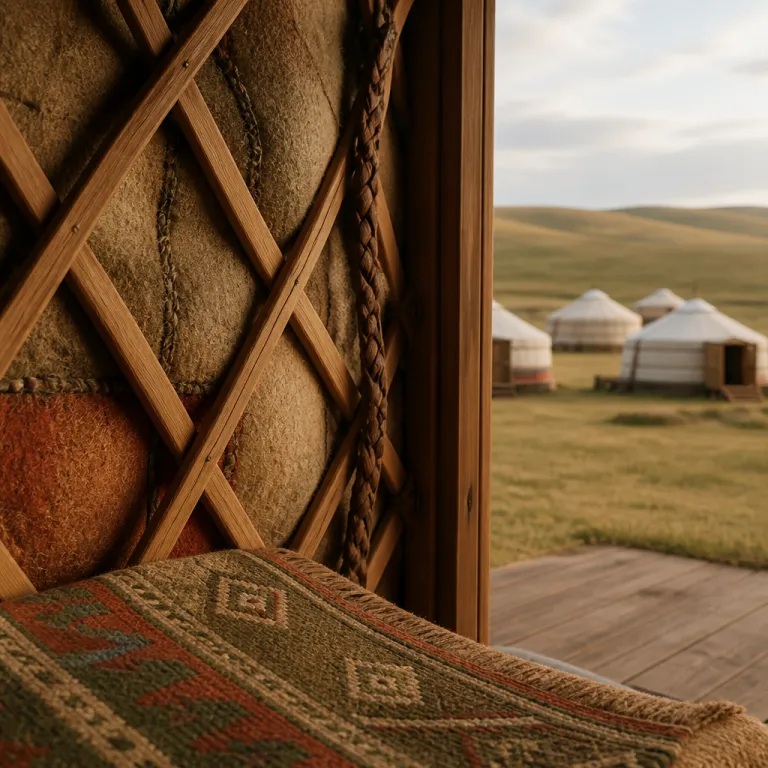
Why a Mongolian yurt in Mongolia belongs on a luxury itinerary
Choosing to stay in a Mongolian yurt in Mongolia adds depth to any premium journey. For many high end travellers, a carefully curated ger camp offers more character than a conventional resort while still providing attentive service and comfort. This traditional Mongolian dwelling becomes a refined base from which you can explore the vast steppe, the legendary Silk Road landscapes, and remote corners of Central Asia.
A Mongolian yurt, known locally as a ger, is a portable circular tent with a wooden frame covered by thick felt and canvas. One expert definition puts it clearly: “What is a Mongolian yurt? A portable, circular dwelling used by Mongolian nomads.” When you stay in Mongolian yurts that have been adapted for tourism, you experience this nomadic architecture with added insulation, proper bathroom facilities, and often surprisingly modern amenities such as charging points and reading lights.
Luxury ger camps in Mongolia now bridge the gap between nomadic heritage and contemporary expectations. Many camps are set on sweeping grasslands or near a national park, where each yurt or ger is oriented toward sunrise or a dramatic ridge line. Travellers who have already stayed in five star city hotels often comment that the silence, the hot tea by the central stove, and the view through the toono skylight feel more indulgent than any marble lobby.
Understanding the structure of Mongolian yurts and what comfort really means
Before booking a Mongolian yurt in Mongolia, it helps to understand how these dwellings are built. Traditional Mongolian artisans create a collapsible wooden frame, then add layers of felt and canvas so that the frame covered by textiles can withstand fierce winds and extreme cold. This same structure is used in both simple nomadic camps and in the more elaborate ger camps that cater to every type of tourist.
At the centre of every Mongolian ger stands the toono, a circular crown that lets in light and air while symbolising the sky. In luxury tourist camps, the toono is often glazed or fitted with a clever cover so that guests can enjoy stargazing without losing warmth from the hot stove below. When you stay in these upgraded yurts, you still see the lattice frame and roof poles, but the interior feels closer to a stylish hotel room than to a basic tent.
Comfort levels vary widely between one ger camp and another, so read descriptions carefully before you visit Mongolia. Some tourist camps provide en suite bathroom facilities with hot showers, while others rely on shared blocks a short walk from the line of yurts. If you plan to explore Ulaanbaatar before or after your yurt camping experience, you can consult refined restaurant and hotel suggestions in guides such as where to eat in Ulaanbaatar when every restaurant is full, then contrast that urban comfort with the simplicity of the steppe.
From nomadic ger to premium ger camp: how tradition meets modern service
The ger has sheltered Mongolian nomads for centuries, yet the way travellers stay in a Mongolian yurt in Mongolia has changed significantly. In the past, guests might have stayed with a herding family in a single Mongolian ger, sharing the same hot stove and sleeping platforms. Today, purpose built ger camps and tourist camps offer rows of Mongolian yurts with more privacy, better insulation, and curated experiences that range from archery lessons to guided horse rides.
Luxury ger camps often work with yurt artisans who still handcraft the frame and use felt made from local wool, then add modern touches such as high thread count linens and subtle lighting. You might arrive by road from Ulaanbaatar, step into your assigned ger, and find a welcome tray with silk cushions, local snacks, and a thermos of hot milk tea. These details transform what could be simple yurt camping into a premium stay that still respects traditional Mongolian aesthetics.
Travellers who have already stayed in several regions of Mongolia often compare the atmosphere of different tourist camp options. Some ger camps feel almost like a resort, with a central restaurant, a bar, and organised excursions to nearby hot springs or a national park. Others remain closer to nomadic life, where a small camp hosts only a few yurts and evenings are spent talking with herders about life along the Silk Road and across Central Asia.
Key Mongolian highlights: Gobi Desert, flaming cliffs, and national parks
Many travellers choose a Mongolian yurt in Mongolia specifically to access the Gobi Desert and its cinematic horizons. In this region, a ger camp often sits on a low rise above the plain, with each Mongolian yurt angled toward the dunes or the distant hills. When you step outside your yurt at dawn, the air may feel surprisingly hot in summer, yet the thick felt walls keep the interior cool.
One of the most sought after Mongolian highlights is the flaming cliffs at Bayanzag, a sandstone escarpment that glows red at sunset and has yielded important dinosaur fossils since the 1920s. Tourist camps near the flaming cliffs usually offer guided drives along the rough road, followed by evenings around a fire as the stars appear above the toono of each ger. Here, the contrast between the ancient rocks, the traditional Mongolian architecture, and the discreetly modern bathroom facilities in some camps creates a memorable balance.
Beyond the Gobi, several national park areas in Mongolia provide different styles of ger camps and tourist camps. In forested regions such as Gorkhi Terelj National Park, you may find Mongolian yurts set near rivers or hot springs, where the camp can arrange horseback riding or gentle hikes. For travellers who prefer to combine these nature based stays with refined city nights, curated hotel collections such as refined stays near Ulaanbaatar’s most captivating highlights help you plan a balanced itinerary.
What to expect inside a luxury Mongolian yurt: layout, heat, and privacy
Stepping into a well appointed Mongolian yurt in Mongolia, you immediately notice the circular layout. The wooden frame radiates from the central toono, and the frame covered by felt gives the space a soft, cocooning feel. In higher end camps, the bed is usually placed opposite the door, with rugs, low furniture, and sometimes silk textiles adding colour.
Heating is a crucial detail, because nights in Mongolia can be cold even after a hot day. Most Mongolian yurts use a central stove that burns wood or dried dung, and staff in ger camps will usually visit before bedtime to light or refill it. In more modern camps, some gers now combine the traditional stove with discreet electric heaters, which helps maintain a stable temperature without losing the nomadic atmosphere.
Privacy levels depend on the layout of each ger camp and tourist camp, so check site maps when you book. Some camps position each Mongolian ger at a generous distance, giving couples and families a sense of seclusion on the open steppe. Others cluster the tents more closely, which can be convenient for groups who have stayed together on a long road journey across Central Asia and along the Silk Road.
How to choose and book the right ger camp for your Mongolian journey
Selecting the ideal Mongolian yurt in Mongolia starts with clarifying how you like to travel. If you value comfort above all, focus on ger camps and tourist camps that clearly describe en suite bathroom facilities, reliable hot water, and heating. Travellers who are more curious about nomadic culture may accept simpler yurt camping in exchange for closer contact with herding families and more traditional Mongolian routines.
When comparing camps, pay attention to how they describe their location relative to the Gobi, a national park, or specific highlights such as the flaming cliffs. Some tourist camp operators emphasise easy access by road, while others specialise in remote settings where you may be the only tourist who stayed that night. Reading detailed reviews about how guests stayed in previous seasons can reveal whether the service feels polished enough to rival a resort or whether it remains pleasantly rustic.
For travellers planning a broader itinerary across Mongolia, it can be helpful to combine several styles of accommodation. You might begin with refined city hotels, then move to a premium ger camp near hot springs, and finish with a simpler Mongolian ger in a family run camp on the open steppe. Curated booking platforms such as luxury hotel booking in Mongolia can streamline this process, allowing you to match each night’s stay to the landscapes and experiences you value most.
Key figures and trends for staying in a Mongolian yurt
- Around 30% of Mongolians still live as pastoral nomads according to estimates from the National Statistics Office of Mongolia, which means the ger remains a living tradition rather than a museum piece.
- Tourism authorities report that a growing share of international visitors choose at least one night in a Mongolian yurt, reflecting strong interest in authentic yet comfortable cultural experiences.
- Ger districts around Ulaanbaatar have expanded as urbanisation accelerates, showing how the traditional Mongolian ger adapts to city life while retaining its core structure.
- Many premium ger camps now operate only during the warmer months, typically from May to September, concentrating demand into a relatively short season and making early booking essential for the most sought after locations.
FAQ about staying in a Mongolian yurt in Mongolia
What is a Mongolian yurt and how is it built?
A Mongolian yurt, or ger, is a portable circular dwelling used by nomadic herders across Mongolia and Central Asia. It relies on a collapsible wooden frame covered with layers of felt and canvas, which makes it both sturdy and easy to dismantle. This structure allows families to move their camps seasonally while staying protected from strong winds and temperature extremes.
How are Mongolian yurts constructed in modern ger camps?
In contemporary ger camps, artisans still use traditional woodworking tools to create the lattice walls and roof poles. The frame is then covered with felt made from sheep’s wool and an outer canvas layer, sometimes upgraded with modern insulation materials. Inside, premium camps add proper beds, textiles, and sometimes private bathroom facilities to meet luxury travel standards.
Why do Mongolians continue to live in yurts today?
Many Mongolians live in yurts because the design suits a nomadic lifestyle that follows grazing for livestock. The portable frame and felt covering can be dismantled, loaded onto trucks or animals, and reassembled quickly in a new camp. Even in urban ger districts, families value the familiar circular layout and the efficient heating provided by the central stove.
What level of comfort can tourists expect in a Mongolian ger camp?
Comfort levels range from very simple yurt camping with shared facilities to high end ger camps that feel close to a resort. In premium tourist camps, guests usually find proper beds, quality linens, and reliable hot water, along with heating for cold nights. Reading detailed descriptions and recent reviews helps you choose a camp that matches your expectations for space, privacy, and service.
Is staying in a Mongolian yurt suitable for families and older travellers?
Staying in a Mongolian yurt can work well for families and older travellers when you choose the right camp. Look for tourist camps that offer easy access from the road, stable flooring, and private bathroom facilities to minimise night time walks. Many ger camps can also arrange gentle activities, such as short horse rides or guided walks, that suit a wide range of ages and fitness levels.